
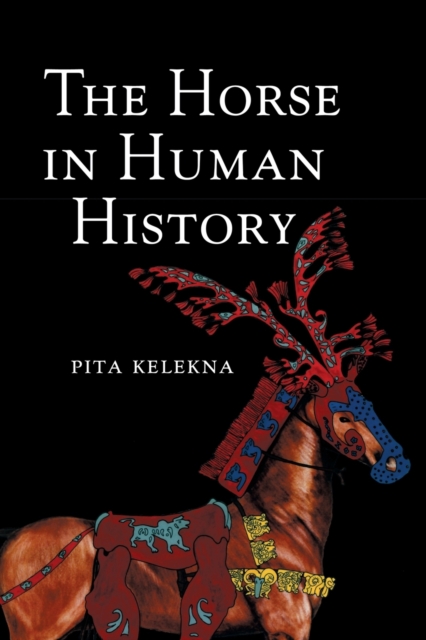
The Horse in Human History
ISBN: 9780521736299
Language: english
Size: 154*228
Weight: 688 g
Page no.: 474
Publish year: 2009
The Horse in Human History
The horse is surely the `aristocrat` of animals domesticated by man. This book assesses the impact of the horse on human society from 4000 BC to AD 2000, by first describing initial horse domestication on the Pontic-Caspian steppes and the early development of driving and riding technologies. Horse-chariotry and cavalry in effect changed the nature of warfare in the civilisations of the Middle East, India, and China. Beyond the battlefield, horsepower also afforded great advances in transport, agriculture, industry, and science. Rapidity of horse communications forged far-flung equestrian empires, where language, law, weights, measures, and writing systems were standardised and revolutionary technologies and ideas were disseminated across continents. Following Columbian contact, Old and New World cultures are evaluated in terms of presence or absence of the horse and Spanish conquest of the horseless America is seen as the model for subsequent European equestrian colonisation of horseless territories around the world.
- Unlike most books which often address only a few aspects of the horse, this book recounts the entire history of the horse.
- The book is multidisciplinary in its approach, drawing on paleozoology, archaeology, ethnology, linguistics, and history.
- The book explores the symbolic dimensions of the myths and ceremonies surrounding equestrianism
Contents
1. Introduction to equestrian man and to Equus; 2. Equus Caballus: horse domestication and Agro-Pastoralism across the Eurasian steppes; 3. Nomadic horse culture of the steppes; 4. Expansion from the steppes to Southwestern and Southern Asia; 5. China and the steppes beyond its borders; 6. Equestrian Europe – solar edifices, hippodromes, and Arthurian chivalry; 7. Arabian conquest from the South; 8. Turkic-invader converts to Islam and crusader opponents; 9. From the steppes, the Altaic nomad conquest of Eurasia; 10. From Europe, Equus returns to its continent of origin; 11. Horses are us.
Category: Kultúra, Társadalomtörténet, Történelem / kultúrtörténet