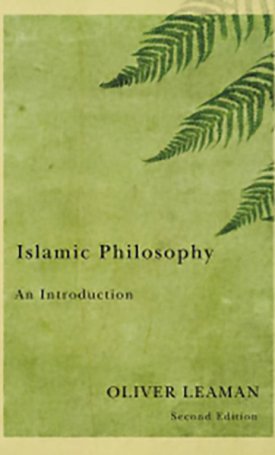


Islamic Philosophy - An Introduction
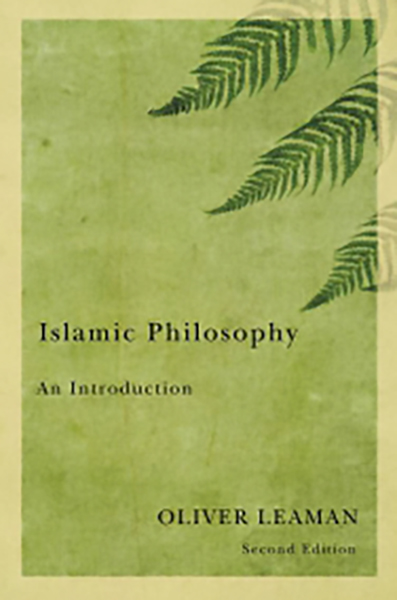
Cover: Fűzött
ISBN: 9780745645995
Edition: 2
Size: 147*240
Weight: 370 g
Page no.: 288
Publish year: 2009
ISBN: 9780745645995
Edition: 2
Size: 147*240
Weight: 370 g
Page no.: 288
Publish year: 2009
-10%
7 910 Ft
7 119 Ft
Preorder(You have to login)
Discounted prices are valid only for orders placed through our webshop.
Islamic Philosophy - An Introduction
Ever since the growth of Islam as a religious and political movement, Muslim thinkers have sought to understand the theoretical aspects of their faith by using philosophical concepts. Leaman outlines this history and demonstrates that, although the development of Islamic philosophy is closely linked with Islam itself, its form is not essentially connected to any particular religion, and its leading ideas and arguments are of general philosophical significance. The author illustrates the importance of Islamic thought within philosophy through the use of many modern examples. He describes and contrasts the three main movements in Islamic philosophy – Peripatetic, Sufi and Illuminationist – and examines the Persian as well as the Arabic traditions. Wide coverage is given to key aspects of Islamic philosophy, including epistemology, ontology, politics, ethics and philosophy of language, providing readers with a balanced view of the discipline. The second edition has been thoroughly revised and updated throughout, including the addition of two new chapters on recent debates surrounding Islam’s need for an enlightenment, and on the future of Islamic philosophy.
The new edition of Islamic Philosophy will continue to be essential reading for students and scholars of the subject, as well as anyone wanting to learn more about one of the most significant and influential philosophical traditions in the world today.
Table of Contents:
•Preface to 2nd Edition
•Author’s note
•Abbreviations
•Glossary
•1 A Short History of Islamic Philosophy
•The growth of Islam
•Neoplatonism
•Major thinkers
•2 Main controversies
•What is Islamic philosophy?
•Early reactions to Greek philosophy in Islamic culture: the Great Debate
•Al-Ghazali and philosophy: the question of creation
•The nature of time
•Mulla Sadra on change
•Iqbal on time
•Ibn Rushd on time
•What can God do?
•Miracles and meaning
•The afterlife
•What can God know?
•Philosophical accounts of religious concepts
•How free is God?
•Essence, existence, and miracles
•The meaning of words
•Meaning and unity
•bi la kayfa
•Ibn Taymiyya on talking about God
•3 Knowledge
•The notion of Islamic science
•Science and rationality
•The nature of knowledge
•What is knowledge for?
•Imagination
•Ibn Sina on knowledge and the oriental philosophy
•Sufism, knowledge and imagination
•Knowledge by presence
•4 Mysticism
•Mysticism as a system
•Being
•Mysticism as a science
•The perfect man
•The deepening of prayer
•Criticisms of Sufism
•5 Ontology
•Being and existence in Islamic philosophy
•Ibn Rushd vs. Ibn Sina on existence
•Mulla Sadra vs. al-Suhrawardi on existence
•The equivocality of being
•Mulla Sadra and mysticism
•The imaginal realm
•Different routes to one truth and the role of imagination
•Allegory and meaning: the imaginal realm again
•Prophecy and its psychological basis
•Is being really the first question in metaphysics?
•6 Ethics
•Theological background: Mu?tazilites vs. Ash?arites
•Ethics and divine power
•Al-Ghazali`s attack on objectivism in ethics
•Trusting authority
•The need for guidance
•7 Politcs
•Plato versus Aristotle
•The diversity of human beings
•Islamic accounts of history
•The notion of the ‘medieval’
•Liberalism vs. Islam
•The case of jihad
•Modern political consequences
•8 The Question of Transmission
•Philosophy and religion
•The notion of cultural contact
•The Andalusi connection
•Getting back to basics
•Radicalism in thought
•Falsafa and hikma: philosophy and wisdom
•The concept of religious reason
•The concept of inclusive reason
•Robinson Crusoe and Hayy ibn Yaqzan
•9 Language
•The case of Ibn Rushd
•Ibn Rushd on meaning
•Ibn Rushd and elitism
•The Enlightenment Project
•Ibn Rushd as a critic of mysticism
•The implications for language
•10 Islamic Philosophy today
•The West as decadent
•Confronting tradition
•Islamic exceptionalism
•Did al-Ghazali destroy Islamic philosophy?
•11 Does Islam need an enlightenment?
•Jewish and Muslim reactions to modernity
•Moses Mendelssohn and Muhammad ?Abduh
•Islamic exceptionalism again
•The Enlightenment and theology
•Christianity as the symbol of modernity
•The need for an enlightenment
•The lack of radicalism in Islamic Qur’an commentary
•References and Bibliography
•Bibliographical Resources
•Index
Publisher: Polity Press
Category: Filozófia, Filozófia / Philosophy of History, Filozófia / vallásfilozófia
Category: Filozófia, Filozófia / Philosophy of History, Filozófia / vallásfilozófia