

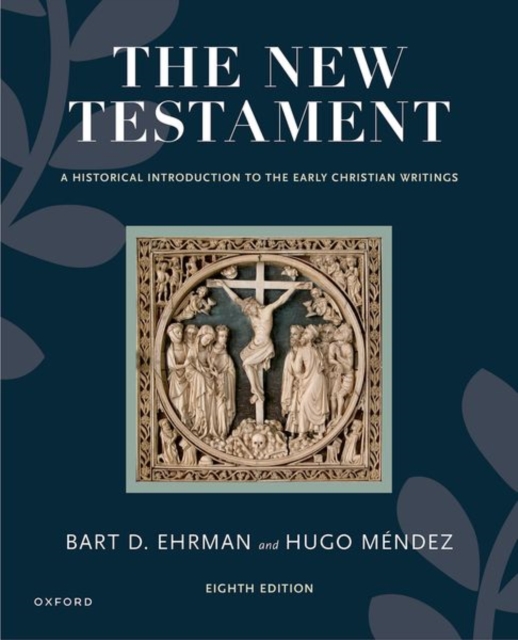
The New Testament - A Historical Introduction to the Early Christian
ISBN: 9780197754023
Nyelv: angol
Méret: 192*235
Tömeg: 922 g
Oldalszám: 544
Megjelenés éve: 2025
The New Testament - A Historical Introduction to the Early Christian
Featuring vibrant full color throughout, this new edition of Bart Ehrman`s highly successful introduction approaches the New Testament from a consistently historical and comparative perspective, emphasizing the rich diversity of the earliest Christian literature. Rather than shying away from the critical problems presented by these books, Ehrman addresses the historical and literary challenges they pose, showing why scholars continue to argue over such significant issues as how the books of the New Testament came into being, when they were written (and by whom), what they mean, how they relate to contemporary Christian and non-Christian literature, and how they came to be collected into the canon of scripture that we now call the New Testament. Distinctive to this study is its unique focus on the historical, literary, and religious milieux of the Greco-Roman world, including early Judaism. As part of its historical orientation, the book also discusses works by other Christian writers who were roughly contemporary with the New Testament, such as the Gospel of Thomas, the Apocalypse of Peter, and the letters of Ignatius. The text is enhanced by maps, timelines, an extensive text box program, and more than one hundred photos. An accompanying Instructor`s Manual contains chapter summaries, discussion questions, and a test bank. An updated Website Study Guide provides chapter summaries, glossary terms, and self-quizzes for students.
New to this edition:
* Coverage of new discoveries--including the Gospel of Judas Iscariot --and of recent advances in scholarship
* A revised discussion of the history of Palestine and Judaism, which now appears much earlier in the book (Chapter 3), thereby providing students with more background on the development of early Christianity at the outset of their studies
* A new photo essay on important Greek manuscripts of the New Testament, ten new text boxes, a revised epilogue, and updated suggestions for further reading
* An expanded glossary featuring more than 200 key terms, which are also listed at the end of each chapter in which they appear
* Key terms appear in boldface type the first time they are used in each chapter
* Vivid full color throughout
Ideal for undergraduate and seminary classes in the New Testament, Biblical Studies, and Christian Origins, The New Testament: A Historical Introduction to the Early Christian Writings, Fourth Edition, encourages students to carefully consider the historical issues surrounding these writings.
Contents
Maps, Time Lines, and Diagrams
Preface
Acknowledgments
Notes on Suggestions for Further Reading
Credits
Master Time Line
1. WHAT IS THE NEW TESTAMENT? THE EARLY CHRISTIANS AND THEIR LITERATURE
Box 1.1 The Canon of Scripture
The Diversity of Early Christianity
Box 1.2 The Hebrew Bible and the Christian Old Testament
The New Testament Canon of Scripture
Box 1.3 The Common Era and Before the Common Era
Box 1.4 The Layout of the New Testament
Box 1.5 The New Testament: One Other Set of Problems
Implications for Our Study
Box 1.6 The New Testament Canon
Excursus: Some Additional Reflections: The Historian and the Believer
2. THE WORLD OF EARLY CHRISTIAN TRADITIONS
The Problem of Beginnings
Box 2.1 Pagan and Gentile
Box 2.2 The Greco-Roman World
One Remarkable Life
The Environment of the New Testament: Religions in the Greco-Roman World
Box 2.3 The Roman Empire
Box 2.4 Divine Rulers as Savior Gods
Box 2.5 Christianity as a Mystery Cult
Box 2.6 The World of Early Christianity
3. THE JEWISH CONTEXT OF JESUS AND HIS FOLLOWERS
Judaism as a Greco-Roman Religion
Box 3.1 The Septuagint: The Hebrew Bible in Greek
Political Crises in Palestine and Their Ramifications
Box 3.2 Flavius Josephus
The Formation of Jewish Sects
Box 3.3 Divine Revelation in the Dead Sea Scrolls
Box 3.4 Women in the Synagogues
Box 3.5 Other Jewish Miracle-Working Sons of God
Box 3.6 The Jewish World of Early Christianity
4. THE TRADITIONS OF JESUS IN THEIR GRECO-ROMAN CONTEXT
Oral Traditions behind the Gospels
Box 4.1 Orality and Literacy in the Ancient World
Box 4.2 Mark and John on the Time of Jesus` Death
Box 4.3 The Traditions of Jesus
Excursus: Some Additional Reflections: The Authors of the Gospels
5. THE CHRISTIAN GOSPELS: A LITERARY AND HISTORICAL INTRODUCTION
The Question of Genre
Biography as a Greco-Roman Genre
Box 5.1 Plutarch on Biography
The Gospels as Ancient Biographies
Box 5.2 The Christian Gospels
6. JESUS, THE SUFFERING SON OF GOD: THE GOSPEL ACCORDING TO MARK
The Beginning of the Gospel: Jesus the Messiah, the Son of God Who Fulfills Scripture
Box 6.1 The Jewish Messiah
Jesus the Authoritative Son of God
Jesus the Opposed Son of God
Box 6.2 Jewish Scribes, Herodians, and Chief Priests
Box 6.3 Jesus` Opponents in Mark
Jesus the Misunderstood Son of God
Box 6.4 Jesus the Angry Healer
Jesus the Acknowledged Son of God
Box 6.5 The Messianic Secret in Mark
Jesus the Suffering Son of God
Box 6.6 Son of God and Son of Man
Jesus the Crucified Son of God
Box 6.7 The Charge of Blasphemy according to Mark
Jesus the Vindicated Son of God
Conclusion: Mark and His Readers
Box 6.8 The Gospel of Mark
7. THE SYNOPTIC PROBLEM AND ITS SIGNIFICANCE FOR INTERPRETATION
Methods for Studying the Gospels
The Synoptic Problem
Box 7.1 Ironing Out the Problems: One Potential Difficulty in Mark`s Account
Box 7.2 The Contents of Q
The Methodological Significance of the Four-Source Hypothesis
Box 7.3 The Synoptic Problem
8. JESUS, THE JEWISH MESSIAH: THE GOSPEL ACCORDING TO MATTHEW
The Importance of Beginnings: Jesus the Jewish Messiah in Fulfillment of the Jewish Scriptures
Box 8.1 Matthew`s Scheme of Fourteen
Box 8.2 The Women in Matthew`s Genealogy
Jesus and His Forerunner from Matthew`s Perspective
The Portrayal of Jesus in Matthew: The Sermon on the Mount as a Springboard
Box 8.3 The Golden Rule
Jesus and the Jewish Cultic Practices Prescribed by the Law
Jesus Rejected by the Jewish Leaders
Box 8.4 Gentiles in Matthew`s Community
Box 8.5 Was Matthew a Jew?
Matthew and His Readers
Box 8.6 Matthew
9. JESUS, THE SAVIOR OF THE WORLD: THE GOSPEL ACCORDING TO LUKE
The Comparative Method and the Gospel of Luke
A Comparative Overview of the Gospel
The Preface to Luke`s Gospel
Box 9.1 Apologetic Literature in Early Christianity
Luke`s Birth Narrative in Comparative Perspective
Box 9.2 Historical Problems with Luke`s Birth Narrative
Box 9.3 The Virginal Conception in Matthew and Luke
From Jew to Gentile: Luke`s Portrayal of Jesus the Rejected Prophet
Luke`s Distinctive Emphases throughout His Gospel
Box 9.4 Jesus` Bloody Sweat in Luke
Box 9.5 Jesus as a Righteous Martyr
Box 9.6 The Institution of the Lord`s Supper in Luke
Conclusion: Luke in Comparative Perspective
Box 9.7 Luke
10. LUKE`S SECOND VOLUME: THE ACTS OF THE APOSTLES
The Genre of Acts and Its Significance
Box 10.1 The Book of Acts: An Ancient Novel?
The Thematic Approach to Acts
From Gospel to Acts: The Opening Transition
Box 10.2 Luke`s Mysterious Two Men
Box 10.3 Luke`s Artistry as a Storyteller 1
Box 10.4 Luke`s Artistry as a Storyteller 2
Themes in the Speeches in Acts
Box 10.5 The Death of Judas
Box 10.6 Christianity before Paul
Box 10.7 The Book of Acts
Excursus: The Author of Luke-Acts and His Audience
Conclusion: The Author and His Themes in Context
11. JESUS, THE MAN SENT FROM HEAVEN: THE GOSPEL ACCORDING TO JOHN
The Gospel of John from a Literary-Historical Perspective
Box 11.1 Jesus` Signs in the Fourth Gospel
Box 11.2 "The Jews" in the Fourth Gospel
The Gospel of John from a Thematic Perspective
The Gospel of John from a Comparative Perspective
Box 11.3 Jesus and the "I Am" Sayings in John
The Gospel of John from a Redactional Perspective
The Socio-Historical Method
Box 11.4 The Death of the Beloved Disciple in the Johannine Community
The Gospel of John from a Socio-Historical Perspective
Box 11.5 John`s De-Apocalypticized Gospel
Box 11.6 Did the Early Christians Think That Jesus was Good?
The Author of the Fourth Gospel
Box 11.7 The Gospel of John
12. FROM JOHN`S JESUS TO THE GNOSTIC CHRIST: THE JOHANNINE EPISTLES AND BEYOND
The Questions of Genre and Author
Box 12.1 A Letter from Greco-Roman Egypt
The New Testament Epistolary Literature and the Contextual Method
Box 12.2 The Gospel and Epistles of John: Some Thematic Similarities
The Johannine Epistles from a Contextual Perspective
Box 12.3 Methods for Studying the New Testament
Box 12.4 House Churches in Early Christianity
Reflections on the Contextual Method
Box 12.5 The Johannine Epistles
Beyond the Johannine Community: The Rise of Christian Gnosticism
Box 12.6 How Do You Know a Gnostic When You See One?
Box 12.7 Gnostics and the Jewish Scriptures
Gnostics and the Johannine Community
Box 12.8 Gnosticism
13. JESUS FROM DIFFERENT PERSPECTIVES: OTHER GOSPELS IN EARLY CHRISTIANITY
Narrative Gospels
Box 13.1 The Gospel of the Ebionites and Early Gospel Harmonies
Sayings Gospels
Box 13.2 Judas Thomas as Jesus` Twin Brother
Box 13.3 The Older Sayings of the Gospel of Thomas
Infancy Gospels
Passion Gospels
Conclusion: The Other Gospels
Box 13.4 The Other Gospels
14. THE HISTORICAL JESUS: SOURCES, PROBLEMS, AND METHODS
Problems with Sources
Non-Christian Sources
Box 14.1 Christianity as a Superstition in the Roman World
Box 14.2 The Testimony of Flavius Josephus
Christian Sources
Using Our Sources: Some of the Basic Rules of Thumb
Specific Criteria and Their Rationale
Box 14.3 Aramaisms as a Criterion of Authenticity
Box 14.4 Judas and the Roasting Chicken
Conclusion: Reconstructing the Life of Jesus
Box 14.5 The Sources for the Historical Jesus
15. EXCURSUS: THE HISTORIAN AND THE PROBLEM OF MIRACLE
Miracles in the Modern World and in Antiquity
The Historian and Historical Method
Box 15.1 The Problem of Miracles
16. JESUS IN CONTEXT
Popular Modes of Resistance to Oppression
An Ideology of Resistance
Box 16.1 Prophecy and Apocalypticism
Box 16.2 First-Century Palestinian Judaism
Jesus in His Apocalyptic Context
Box 16.3 O Little Town of Nazareth
Box 16.4 Jesus of Sepphoris?
Box 16.5 Jesus as an Apocalyptic Prophet
17. JESUS, THE APOCALYPTIC PROPHET
The Apocalyptic Deeds of Jesus
Box 17.1 Explaining Away the Apocalyptic Traditions: Seeking the Lost
Box 17.2 Explaining Away the Apocalyptic Traditions: Getting a Date
Box 17.3 Was Jesus a Cynic Philosopher?
Box 17.4 The Temple Incident as an Enacted Parable
Box 17.5 Another Apocalyptic Jesus
The Apocalyptic Teachings of Jesus
Box 17.6 Was Jesus Married with Children?
Box 17.7 The Cosmic Deliverer of Israel
Box 17.8 Jesus and "Family Values"
The Apocalyptic Death of Jesus
Box 17.9 Jesus and Judas, the Betrayer
Box 17.10 Jesus the Apocalyptic Prophet
18. FROM JESUS TO THE GOSPELS
The Beginning of Christianity
Jesus` Resurrection from an Apocalyptic Perspective
Box 18.1 The Women and the Empty Tomb
Box 18.2 Jesus, the Messiah, and the Resurrection
Jesus` Death, according to the Scriptures
Box 18.3 Vicarious Suffering in Jewish Martyrologies and Other Greco-Roman Literature
The Emergence of Different Understandings of Jesus
Box 18.4 From Jesus to the Gospels
19. PAUL THE APOSTLE: THE MAN AND HIS MISSION
The Study of Paul: Methodological Difficulties
Box 19.1 The Pauline Corpus
Box 19.2 Other Sources for the Life of Paul
The Life of Paul
Box 19.3 What Did Paul Look Like?
Box 19.4 Paul on the Road to Damascus
Box 19.5 Paul and His Mission
20. PAUL AND HIS APOSTOLIC MISSION: 1 THESSALONIANS AS A TEST CASE
The Founding of the Church in Thessalonica
The Beginnings of the Thessalonian Church: A Socio-Historical Perspective
Box 20.1 Rules for a Private Association
The Church at Thessalonica after Paul`s Departure
Box 20.2 Christians Maligned as Perverts and Criminals
Box 20.3 The Thessalonians` Perplexity
Conclusion: Paul the Apostle
Box 20.4 1 Thessalonians
21. PAUL AND THE CRISES OF HIS CHURCHES: 1 AND 2 CORINTHIANS, GALATIANS, PHILIPPIANS, AND PHILEMON
1 Corinthians
Box 21.1 Possibilities of Existence in the Afterlife
Box 21.2 1 Corinthians
2 Corinthians
Box 21.3 The Partitioning of 2 Corinthians
Box 21.4 2 Corinthians
Galatians
Box 21.5 The Logic of the Opponents` Position in Galatia
Box 21.6 Why Does Paul Appeal to the Law to Deny the Importance of the Law?
Box 21.7 Just Say "No": Paul`s Gospel of Sexual Abstinence
Box 21.8 Galatians
Philippians
Box 21.9 The Christ Hymn of Philippians
Box 21.10 Was Paul Contemplating Suicide?
Box 21.11 Philippians
Philemon
Box 21.12 Philemon
22. THE GOSPEL ACCORDING TO PAUL: THE LETTER TO THE ROMANS
The Occasion and Purpose of the Letter
Box 22.1 The Beginnings of the Roman Church
The Theme of the Epistle
Box 22.2 Paul`s Gospel to the Romans
Pauline Models for Salvation
Box 22.3 Two Different Ways of Salvation in Paul?
Box 22.4 Judicial and Participationist Models of Salvation in Paul
The Flow of Paul`s Argument
Box 22.5 Other Models of Salvation in Paul
Conclusion: Paul and the Romans
Box 22.6 Romans
23. DOES THE TRADITION MISCARRY? PAUL IN RELATION TO JESUS, JAMES, THECLA, AND THEUDAS
Paul in Relation to What Came Before
Box 23.1 Jesus and Paul: Some of the Similarities
Box 23.2 Jesus and Paul: Some of the Differences
Paul in Relation to What Came After
Conclusion: Pauline Christianities
Box 23.3 Paul in Relation to What Came Before and After
24. IN THE WAKE OF THE APOSTLE: THE DEUTERO-PAULINE AND PASTORAL EPISTLES
Pseudonymity in the Ancient World
Box 24.1 Paul`s Third Letter to the Corinthians
The Deutero-Pauline Epistles
Box 24.2 The Resurrection of Believers in Paul and Colossians
Box 24.3 The "Household Rules" in Colossians and Ephesians
Box 24.4 The Vocabulary of Salvation in Paul and Ephesians
Box 24.5 The Deutero-Pauline Epistles
The Pastoral Epistles
The Historical Situation and Authorship of the Pastoral Epistles
Box 24.6 Church Hierarchy in Ignatius
Conclusion: The Post-Pauline Pastoral Epistles
Box 24.7 The Pastoral Epistles
25. FROM PAUL`S FEMALE COLLEAGUES TO THE PASTOR`S INTIMIDATED WOMEN: THE OPPRESSION OF WOMEN IN EARLY CHRISTIANITY
Women in Paul`s Churches
Women Associated with Jesus
Box 25.1 Mary Magdalene
Paul`s Understanding of Women in the Church
Women in the Aftermath of Paul
Box 25.2 Similarities between 1 Tim 2:11-15 and 1 Corinthians 14:34-35
Ancient Ideologies of Gender
Gender Ideology and the Pauline Churches
Box 25.3 Women in Early Christianity
26. CHRISTIANS AND JEWS: HEBREWS, BARNABAS, AND LATER ANTI-JEWISH LITERATURE
Early Christian Self-Definition
Box 26.1 Early and Diverging Views of Christians and Jews
Continuity and Superiority: The Epistle to the Hebrews
Box 26.2 Divergent Views of Christ in Hebrews
Box 26.3 Hebrews
Discontinuity and Supremacy: The Epistle of Barnabas
Box 26.4 Six Thousand Years and Counting
Box 26.5 Gematria in Early Christianity
Box 26.6 The Epistle of Barnabas
Conclusion: The Rise of Christian Anti-Judaism
Box 26.7 Melito`s Passover Sermon
27. CHRISTIANS AND PAGANS: 1 PETER, THE LETTERS OF IGNATIUS, THE MARTYRDOM OF POLYCARP, AND LATER APOLOGETIC LITERATURE
The Persecution of the Early Christians
Box 27.1 The Christian Disruption of the Family: The Case of Perpetua
Christians in a Hostile World: The Letter of 1 Peter
Box 27.2 The Spread of Christianity
Box 27.3 1 Peter
Christians Sentenced to Death: The Letters of Ignatius
Box 27.4 An Alternative View of Christian Martyrdom
Box 27.5 The Letters of Ignatius
Christians before the Tribunal: The Martyrdom of Polycarp
Box 27.6 The Martyrdom of Polycarp
Christians on the Defense: The Later Apologetic Literature
28. CHRISTIANS AND CHRISTIANS: JAMES, THE DIDACHE, POLYCARP, 1 CLEMENT , JUDE, AND 2 PETER
The Epistle of James
The Didache
Box 28.1 The Development of the Lord`s Prayer
Polycarp`s Letter to the Philippians
Box 28.2 Polycarp and the Early Christian Tradition
1 Clement
Box 28.3 Birds Raised from the Dead and Other Problems in the Corinthian Church
Jude
2 Peter
Box 28.4 Peter, the Smoked Tuna, and the Flying Heretic
Conclusion: Conflicts within the Early Christian Communities
Box 28.5 Christian Internal Conflicts
29. CHRISTIANS AND THE COSMOS: THE REVELATION OF JOHN, THE SHEPHERD OF HERMAS, AND THE APOCALYPSE OF PETER
Introduction: The End of the World and the Revelation of John
The Content and Structure of the Book of Revelation
The Book of Revelation from a Historical Perspective
Apocalyptic Worldviews and Apocalypse Genre
Box 29.1 The Book of Revelation as Underground Literature
Box 29.2 The Author of Revelation in the Early Church
The Revelation of John in Historical Context
Box 29.3 An Ancient Copyright Curse
Box 29.4 Futuristic Interpretations of the Book of Revelation
Box 29.5 The Book of Revelation
The Shepherd of Hermas
Box 29.6 The Shepherd of Hermas and the Muratorian Canon
The Apocalypse of Peter
30. EPILOGUE: DO WE HAVE THE ORIGINAL NEW TESTAMENT?
The Manuscripts of the New Testament
Box 30.1 30,000 Variant Readings?!
Kinds of Changes in Our Manuscript
Box 30.2 Citing Chapter and Verse
Box 30.3 Women in the Manuscript Tradition of the New Testament
Criteria for Establishing the Original Text
Box 30.4 Is the Doctrine of the Trinity Explicitly Taught in the New Testament?
Conclusion: The Original Text of the New Testament
Box 30.5 The Text of the New Testament
Glossary of Terms
Index