
The Optical Unconscious
ISBN: 9780262611053
Size: 178
Weight: 590 g
Page no.: 366
Publish year: 1994
The Optical Unconscious
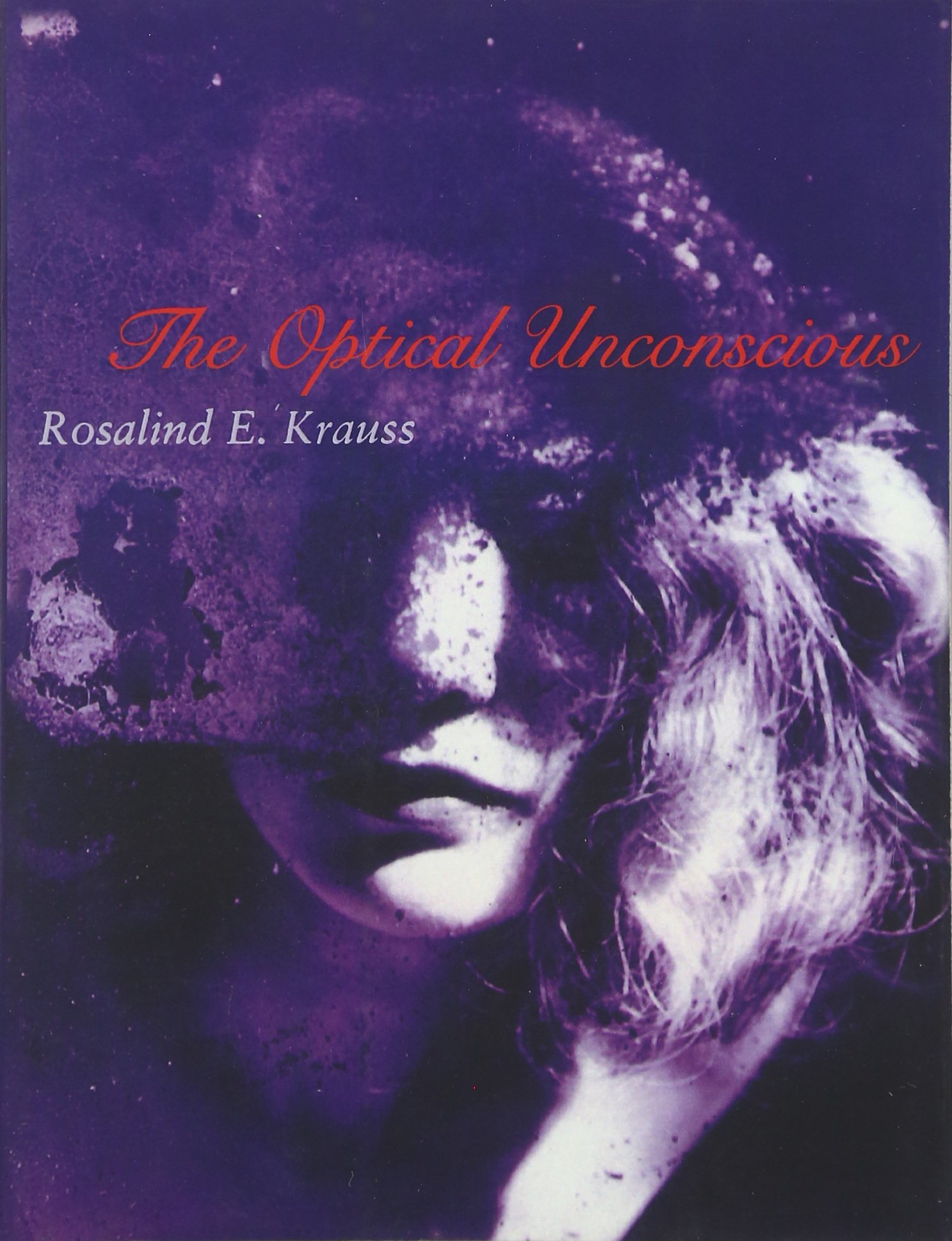
The Optical Unconscious is a pointed protest against the official story of modernism and against the critical tradition that attempted to define modern art according to certain sacred commandments and self-fulfilling truths. The account of modernism presented here challenges the vaunted principle of "vision itself." And it is a very different story than we have ever read, not only because its insurgent plot and characters rise from below the calm surface of the known and law-like field of modernist painting, but because the voice is unlike anything we have heard before. Just as the artists of the optical unconscious assaulted the idea of autonomy and visual mastery, Rosalind Krauss abandons the historian's voice of objective detachment and forges a new style of writing in this book: art history that insinuates diary and art theory, and that has the gait and tone of fiction.
The Optical Unconscious will be deeply vexing to modernism's standard-bearers, and to readers who have accepted the foundational principles on which their aesthetic is based. Krauss also gives us the story that Alfred Barr, Meyer Shapiro, and Clement Greenberg repressed, the story of a small, disparate group of artists who defied modernism's most cherished self-descriptions, giving rise to an unruly, disruptive force that persistently haunted the field of modernism from the 1920s to the 1950s and continues to disrupt it today.
In order to understand why modernism had to repress the optical unconscious, Krauss eavesdrops on Roger Fry in the salons of Bloomsbury, and spies on the toddler John Ruskin as he amuses himself with the patterns of a rug; we find her in the living room of Clement Greenberg as he complains about "smart Jewish girls with their typewriters" in the 1960s, and in colloquy with Michael Fried about Frank Stella's love of baseball. Along the way, there are also narrative encounters with Freud, Jacques Lacan, Georges Bataille, Roger Caillois, Gilles Deleuze, and Jean-François Lyotard.
To embody this optical unconscious, Krauss turns to the pages of Max Ernst's collage novels, to Marcel Duchamp's hypnotic Rotoreliefs, to Eva Hesse's luminous sculptures, and to Cy Twombly's, Andy Warhol's, and Robert Morris's scandalous decoding of Jackson Pollock's drip pictures as "Anti-Form." These artists introduced a new set of values into the field of twentieth-century art, offering ready-made images of obsessional fantasy in place of modernism's intentionality and unexamined compulsions.
AUTHOR:
Rosalind E. Krauss is University Professor in the Department of Art History at Columbia University, where, from 1995 to 2006, she held the Meyer Schapiro Chair in Modern Art and Theory. She is a founding editor of October and the author of Passages in Modern Sculpture, The Originality of the Avant-Garde and Other Myths, The Optical Unconscious, Bachelors, Perpetual Inventory, Under Blue Cup (all published by the MIT Press), and other books.