Prehistory - A Very Short Introduction
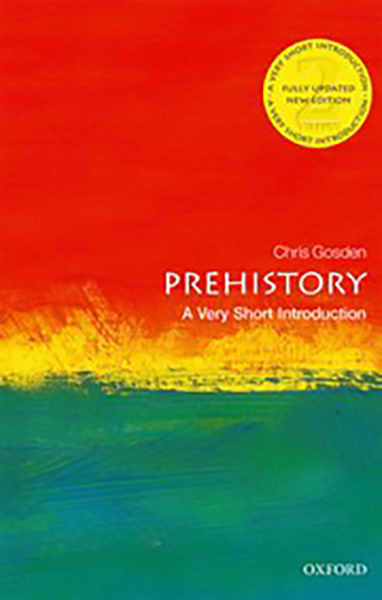
Cover: Ragasztott
ISBN: 9780192803436
Size: 111 * 174
Weight: 135 g
Page no.: 152
Publish year: 2018
ISBN: 9780192803436
Size: 111 * 174
Weight: 135 g
Page no.: 152
Publish year: 2018
-10%
3 910 Ft
3 519 Ft
Preorder(You have to login)
Discounted prices are valid only for orders placed through our webshop.
Prehistory - A Very Short Introduction
In this new edition of his Very Short Introduction, Chris Gosden invites us to think seriously about who we are by considering who we have been. As he explains, many new discoveries have been made in archaeology over the last ten years, and a new framework for prehistory is emerging. A greater understanding of Chinese and central Asian prehistory has thrown Eurasian prehistory in quite a different light, with flows of the influence of culture over large areas now evident. This has eaten away at the traditional view of human progress around the invention of agriculture, the development of cities and (much later) the industrial revolution, and given us new geographies to think about. Chris Gosden explores the new landscape of our prehistory, and considers the way the different geographical locations weave together.
Table of Contents:
Introduction
1: When does prehistory start and end?
2: What use is prehistory?
3: In the beginning - African origins
4: The end of the beginning - the establishment of human groups in Europe and Asia
5: Continental fusion - the creation of connected communities across Europe and Asia
6: New worlds - the Americas, Australia and the Pacific
7: Final thoughts
References
Further reading
Index
Author Information:
Chris Gosden is Professor of European Archaeology at Oxford. He has written and edited a number of books on the history of the Pitt Rivers, on Celtic art and reporting on major excavations. He is currently directing the English Landscape and Identities project looking at the history of the English Landscape from 1500 BC to AD 1088 (funded by the ERC), and the European Celtic Art in Context project, exploring Celtic art and its eastern connections (funded by the Leverhulme Trust). He is also finishing a project on the English Collections of the Pitt Rivers Museum (funded by the ESRC).