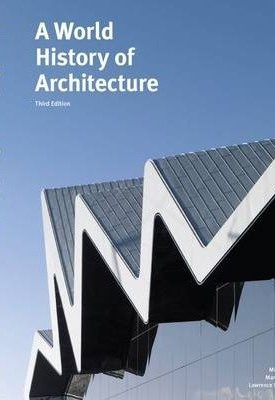


World History of Architecture, A

Borító: Fűzött
ISBN: 9781856693714
Méret: 29
Oldalszám: 608
Megjelenés éve: 2004
ISBN: 9781856693714
Méret: 29
Oldalszám: 608
Megjelenés éve: 2004
-10%
11 166 Ft
10 050 Ft
Előrendelés(Bejelentkezés szükséges)
A kedvezményes árak kizárólag a webshopunkon keresztül leadott megrendelésekre érvényesek!
World History of Architecture, A
350 plans and line drawings
In about 40 BCE the Roman architect and engineer Vitruvius declared firmitas, utilitas, and venustas — firmness, commodity, and delight — to be the three essential attributes of architecture. These qualities are brilliantly explored in this book, which uniquely comprises both a detailed survey of Western architecture, including Pre-Columbian America, and an introduction to architecture from the Middle East, India, Russia, China, and Japan. Written in a clear and engaging style, the text encourages readers to examine closely in photographs and line drawings the pragmatic, innovative, and aesthetic attributes of buildings, and to imagine how these would have been praised or criticized by contemporary observers. Architecture is discussed in various contexts — artistic, economic, environmental, political, social, and technological — so as to determine the extent to which buildings met the needs of clients, society at large, and future generations.
This book also examines the unique methods of great architects past and present. Among them are Alvar Aalto, Robert Adam, Leon Battista Alberti, Filippo Brunelleschi, Gustave Eiffel, Peter Eisenman, Antonio Gaudi, Frank Gehry, Walter Gropius, Imhotep, Le Corbusier, Charles Rennie Mackintosh, Michelangelo, Glenn Murcutt, Andrea Palladio, Eero Saarinen, Koca Sinan, Louis Sullivan, Christopher Wren, and Frank Lloyd Wright.
The global reach of the text is matched by a rich assortment of photographs from the world over and a greater array of detailed line drawings than can be found in any architectural survey. The authors have created a formidable body of work that ranges over much of the world`s architectural heritage and testifies to some of the greatest achievements of the human spirit.
This impressive survey of world architecture includes a wealth of information, and is beautifully formatted and enhanced with 570 photographs (300 in color) and 350 line drawings. A series of maps precedes the informative and well-written text. The introduction gives an overview of the design and construction of both individual buildings and entire communities, and the chapters are arranged chronologically from prehistoric times to late twentieth century. There is heavy emphasis on Western traditions, but also considerable discussion of Asian, Islamic, Russian, and pre-Columbian American structures. Architectural terms are highlighted in bold type the first time they appear and are presented together in a glossary along with an excellent annotated bibliography. Perhaps the most rewarding features, besides the stunning color illustrations, are the line drawings depicting floor plans and elevations. Each chapter presents a brief overview of historical events and social customs that influenced architectural styles, as well as individuals who played significant roles in the support, design, and construction of various projects. Interspersed throughout are separate essays highlighting particular aspects of architectural history. Not only is this collection an excellent source of information, it is also an entertaining journey through the history of world architecture.